

- 7 June 2026
- No Comment
- 4307
How a Finance Graduate Can Upskill in 2026 | And Actually Stay Relevant


You graduated in finance. You passed your professional exams. Maybe you’re a CA, ACCA, or CPA. You’ve done the hard part.
But here’s what no one tells you at graduation: the qualification gets you in the room. What keeps you in the room, and eventually gets you to the head of the table, is everything you build after it.
The finance profession is changing faster than most people are willing to admit. AI is automating routine analysis. ERPs are consolidating workflows. CFOs are expected to be strategic partners, not just custodians of numbers. If your skill set stopped evolving the day you cleared your finals, you are already behind.
This isn’t a scare tactic. It’s a reality that most finance professionals only confront when they’re stuck in the same role for five years wondering why the promotions keep going to someone else.
So let’s talk about it honestly, what should a finance graduate actually be building in 2026?
1. Technical Accounting Is Your Floor, Not Your Ceiling
This is where most finance grads are strongest, and also where most stop.
Yes, IFRS, consolidation, financial close, tax computations, these matter enormously. But in most finance roles, especially in industry, technical accounting is a threshold requirement. You need it to get hired. It doesn’t differentiate you once you’re in.
The professionals who move up fast are those who take their technical base and layer business judgment on top of it. They understand what’s driving a number, not just how to record it. They can walk into a business unit meeting and speak the language of the operations team. They know when to challenge a management assumption and when to support it.
Technical skills are the foundation. The structure you build on top of that foundation is what determines your career trajectory.
2. FP&A: The Missing Piece for Most Finance Professionals
If there’s one area where audit and compliance professionals are consistently underprepared for industry roles, it’s Financial Planning and Analysis.
FP&A is not Excel tricks. FP&A is about shaping decisions. It’s about building a forecast that a CEO actually uses to allocate capital. It’s about presenting a variance analysis that tells a story rather than reciting numbers. It’s about connecting the P&L to the strategic direction of the business.
For anyone coming from audit or compliance, FP&A is the bridge from technical work to genuine business partnership, and one of the fastest routes toward CFO-track roles.
The good news: you can start learning it for free. Here are credible, globally recognized resources:
- Free FP&A Course: Nicolas Boucher: http://nicolasboucher.online/free-fpa-course-for-finance-professionals/
- CFI – FP&A Resources: http://corporatefinanceinstitute.com/topic/financial-planning-analysis-fpa/
- FP&A Foundations (Free Tutorial): Udemy: http://www.udemy.com/course/fpa-financial-planning-analysis-foundations/
- Financial Analysis Courses (Free Audit): Coursera: https://www.coursera.org/courses?query=financial%20planning%20and%20analysis
Start there. Build the language. Then apply it in your current role, even if your title doesn’t say FP&A yet.
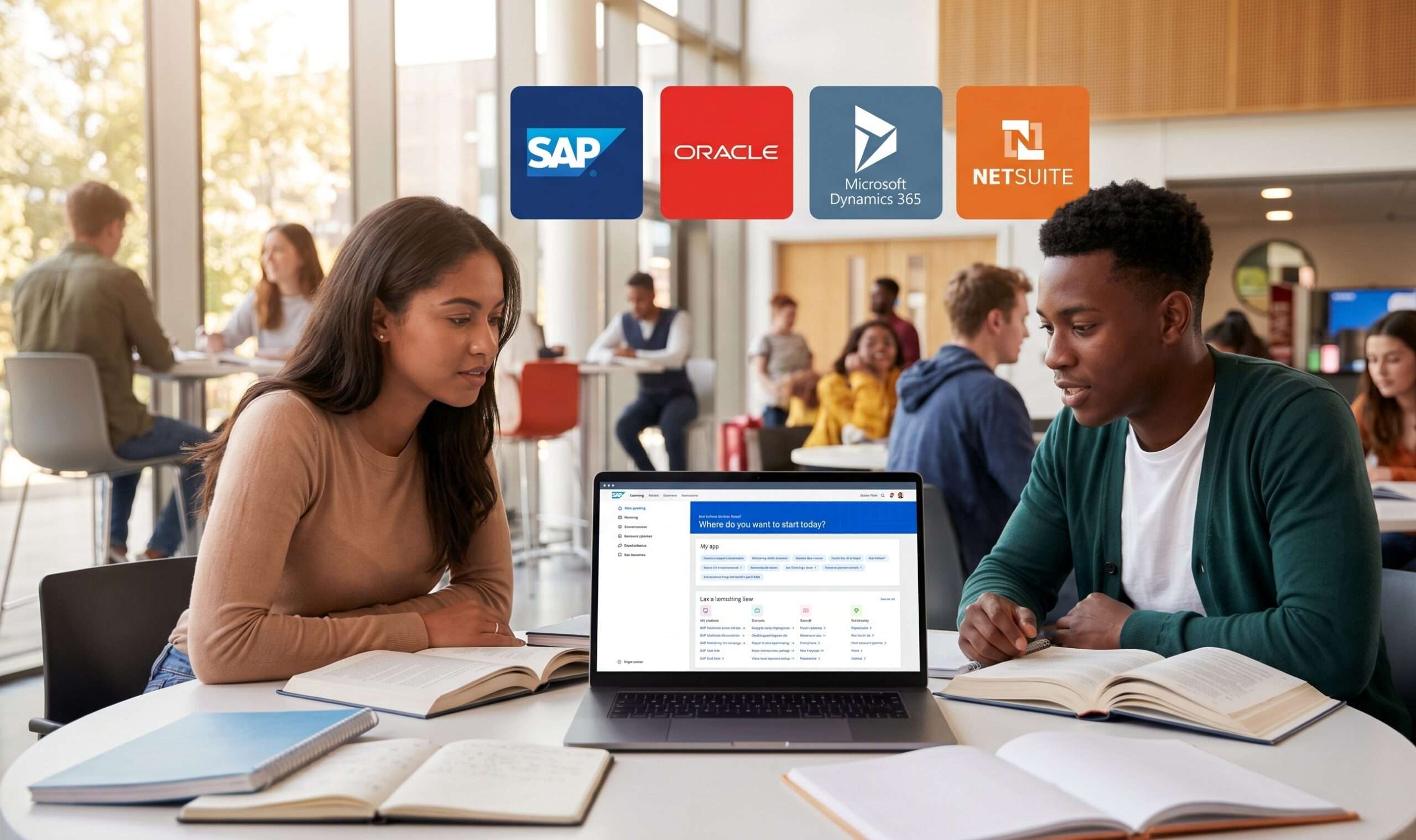
3. ERP Fluency Is No Longer Optional
Let me be direct: auditing a company that uses SAP is not the same as knowing SAP.
Qualified finance professionals lose opportunities specifically because they can’t operate independently on an ERP. They know the numbers. They don’t know the system that generated the numbers. That gap costs careers.
In 2026, ERP skills are in high demand across GCC, South Asia, UK, and EU markets. Employers want people who can navigate these systems without hand-holding. Here are free, official training resources across the major platforms:
SAP ERP
SAP skills are in massive demand across Finance, Supply Chain, HR, IT, and Consulting.
- SAP Learning Journeys (Official): Structured, role-based learning paths directly from SAP: https://learning.sap.com/browse
- Free SAP Training (All Modules): Step-by-step tutorials for SAP FICO, MM, SD, ABAP, HR, Basis, HANA & more: https://lnkd.in/dUPj8Jm9
- Becoming an SAP Professional: Covering 4 modules: https://lnkd.in/dbNEVJ3v
- SAP Online Tutorials: Free Step-by-Step Guides for beginners (FICO, MM, SD, HCM, ABAP, EWM): https://lnkd.in/dNFwyadq
- MyGreatLearning: Introduction to SAP: https://www.mygreatlearning.com/academy/learn-for-free/courses/introduction-to-sap
- Guru99 SAP Training Hub: https://www.guru99.com/sap-training-hub.html
- Michael Management: Free SAP Training: https://www.michaelmanagement.com/free-sap-training.php
Pro Tip: Start with SAP Basics → S/4HANA → One functional module (FICO/MM/SD) or ABAP depending on your background.
Oracle Fusion ERP
Oracle skills, especially OCI, Autonomous DB, ERP, HCM, and SCM, are in high demand across GCC, UK, EU, and South Asia.
- Oracle AI Agent Studio for Fusion Applications Foundations Associate: https://lnkd.in/dFpQv7HM
- AI for You: Training and Assessment: https://lnkd.in/dywVqmAD
- Oracle ERP Financials, HCM, SCM, PPM, OTBI Training Channel: https://lnkd.in/dupfcaK6
- Oracle HCM Training: https://lnkd.in/dTKd2_r8
- Oracle Fusion Financials Training: https://lnkd.in/daHAv_sr
- Oracle Fusion SCM Training: https://lnkd.in/dKSanRHP
Oracle NetSuite ERP
Particularly relevant if you’re targeting SME-focused or mid-market companies.
- Oracle NetSuite Online Help / Docs: https://docs.oracle.com/en/cloud/saas/netsuite/ns-online-help/preface_3710623483.html
- NetSuite Official Training Portal: https://www.netsuite.com/portal/services/training.shtml
- Free NetSuite Courses: HouseBlend: https://houseblend.io/articles/free-netsuite-courses
- Cloud Foundation: NetSuite Free Course: https://learning.cloudfoundation.com/p/netsuite-training-free-course
Microsoft Dynamics 365 ERP
- Microsoft Learn: Dynamics 365 Finance Learning Path (Free): https://learn.microsoft.com/en-us/dynamics365/get-started/training/
- Dynamics 365 Bootcamp: https://dynamics365bootcamp.com/
- MyGreatLearning: Basics of Microsoft Dynamics 365: https://www.mygreatlearning.com/academy/learn-for-free/courses/basics-of-microsoft-dynamics-365
- YouTube: Dynamics 365 Playlist: https://www.youtube.com/playlist?list=PLTQ5WEFIKK2w0-902wpO1iWdtAnB59cmc
- EarnerApp: Learn Microsoft Dynamics 365: https://earnerapp.com/learn-microsoft-dynamics-365/
Odoo ERP
- Odoo Official Slides: https://www.odoo.com/slides
- Class Central: Odoo Courses: https://www.classcentral.com/subject/odoo
- The Complete Odoo Technical Course: From Zero to Hero (GitHub): https://github.com/iammiracle/The-Complete-Odoo-Technical-Course-From-Zero-to-Hero
- Hibou: Free Odoo 14 Essentials Course: https://hibou.io/free-odoo-14-essentials-course
- Accurates: Odoo Training Materials: https://accurates.com.sa/resources/training-materials
Infor ERP
- Infor Customer Education: https://www.infor.com/customer-success/education
- Visual South: Infor ERP Training Guide: https://www.visualsouth.com/blog/infor-erp-training
- Xencore Global: Infor Courses: https://www.xencoreglobal.com/infor-courses/
- Infor EduPortal: Training Catalog: https://eduportal.infor.com/trainingcatalog
- Infor Training Guide: https://eduportal.infor.com/trainingcatalog/Training-Guide
Pick the ERP most common in your target industry and go deep. Depth beats breadth every time.
4. AI and Prompt Engineering:This Is Not a Trend,It’s a Shift
The world is moving from “knowing the answer” to “knowing how to ask the right question.”
Finance professionals who master prompt engineering will outperform those who don’t. Full stop.
Think about what that means practically. A financial model that used to take a day can be structured in hours. A variance commentary that once required careful drafting can be refined in minutes. Board deck insights that took days of analysis can now be synthesized faster, if you know how to direct AI properly.
This is not about replacing judgment. AI won’t replace finance professionals. But finance professionals who know how to use AI will replace those who don’t.
Where to start – All free:
- Google Cloud AI & ML Learning Paths (Free to audit): https://lnkd.in/dzQKWBzn
- Google AI Essentials (Free version): https://lnkd.in/dKG6XBG2
- Practical AI and Prompting for Finance Professionals: https://lnkd.in/dcT7x7cY
- DeepLearning.AI: Prompt Engineering for Everyone: https://lnkd.in/dcGsX7mN
- Free University Courses (with central bank use case): https://lnkd.in/dAZv-aXK
- Vanderbilt: Prompt Engineering Masterclass / Advanced Prompting: https://lnkd.in/dX_XJnkG
- OpenAI: ChatGPT Prompt Engineering for Developers (OpenAI + Andrew Ng): https://lnkd.in/dAhsXiX4
- Microsoft Learn: AI & Copilot Prompting: https://lnkd.in/dUx-h2hp
- Microsoft Copilot Studio & Automation: https://lnkd.in/dj6RAQC9 and https://lnkd.in/dQDJRhR2
- AI Product Management: https://lnkd.in/dbhZWUuq
- Harvard’s AI with Python: https://lnkd.in/dqfK6_Hn
Pick one. Finish it. Start applying it immediately.
5. Accounting Software for the SME Market
If you’re thinking about consulting, freelancing, or building a practice in the small and mid-market space, you need fluency in at least one SME accounting platform. Clients will not hire advisors who need to be trained on the tools the business already uses.
Don’t fall into the trap of course sellers. True money-makers don’t have time to sell courses, they build and sell products or services. All of the below resources are free.
QuickBooks
Xero
Zoho Books
Sage
Note: Sharing multiple options per platform. If any link asks for payment, simply use an alternate.
6. Certifications That Actually Open Doors
The right certification signals credibility and forces structured learning. The wrong one wastes time and money.
CIA: Certified Internal Auditor
For professionals with an accounting background (CA / ACCA / CPA) serving in Internal Audit and aiming to move to GCC, CIA is often a prerequisite for IA roles as per prevailing market practice.
The CIA exam is globally recognized, MCQ-based, and can be completed online within a year with consistent preparation. Here are FREE video lectures covering all three parts:
CIA Part 1: Internal Audit Fundamentals: https://youtu.be/K-6WbLrOfZw?si=f84nSkBD5M2Y6nM9
CIA Part 2: Practice of Internal Auditing:
- Extra Lecture: https://www.youtube.com/watch?v=FrB6F2RTPFQ
CIA Part 3: Business Knowledge for Internal Auditing: https://www.youtube.com/playlist?list=PLf92tuvH8TRJpiVPBE4nv4lkzypGsbF47
Notes & Tips:
- Free playlists are excellent for conceptual clarity, but for exam-level practice you’ll still need question banks.
- Combine with free notes/flashcards from KappEdge or Gleim to reinforce learning.
- Consistency matters: watch one lecture daily and practice MCQs alongside.
Other Certifications Worth Considering
- CFA: If your ambition is investment management, equity research, or corporate treasury, CFA is the benchmark.
- CPA (US) or ACCA: If you already hold a local CA qualification and are targeting international markets, either adds geographic portability.
- FP&A Certification (AFP or similar): Underrated. Formalizes expertise for professionals already in corporate finance roles.
One certification pursued seriously is worth more than three completed superficially.
7. Transitioning from Audit Firm to Industry
Transitioning from audit to industry requires more than technical skills, it demands relevance. To stand out, you need to add three critical capabilities:
1) Deep Industry Knowledge If you’re applying to a bank, you must understand the business model, regulatory requirements, risks, and controls. Audit exposure alone isn’t enough, you need to think like an insider.
2) ERP Mastery Auditing clients with strong ERP systems doesn’t make you fluent. You must know the workflow end-to-end and operate independently. The free ERP training links in Section 3 above are your starting point.
3) Financial Planning & Analysis (FP&A) This is the missing piece for most auditors. FP&A builds the bridge from compliance to decision-making and business partnering. The free FP&A resources in Section 2 are where to begin.
FP&A is not about Excel tricks. It’s about shaping decisions. That’s the real edge for professionals aiming at CFO-track roles.
The Action Plan
Let me bring this together into something you can act on.
This week: Pick one skill gap from the above that is most relevant to your next career move. Not all of them, one.
This month: Complete one free course or certification module. Measure completion, not enrollment. Anyone can enroll. Finish it.
This quarter: Apply what you’ve learned in your current role. Navigate an ERP workflow independently. Use AI to draft a first pass on your next analysis. Write a sharper variance commentary. The learning only compounds when it meets reality.
This year: Have a version of yourself at the end of the year that is meaningfully different from the one who started it, different in capability, not just in title.
The finance profession rewards those who stay relevant. And staying relevant in 2026 means being technically strong, commercially aware, digitally fluent, and able to tell the story behind the numbers.
That’s the standard. It’s also the opportunity.
#Finance #FinanceCareers #Upskilling #FPA #SAP #Oracle #AI #PromptEngineering #CharteredAccountant #ACCA #CPA #CIA #ERP #CareerDevelopment #Free #Learning