

- 14 April 2026
- No Comment
- 321
Claim Your $100: Google’s $135M Data Settlement is Live
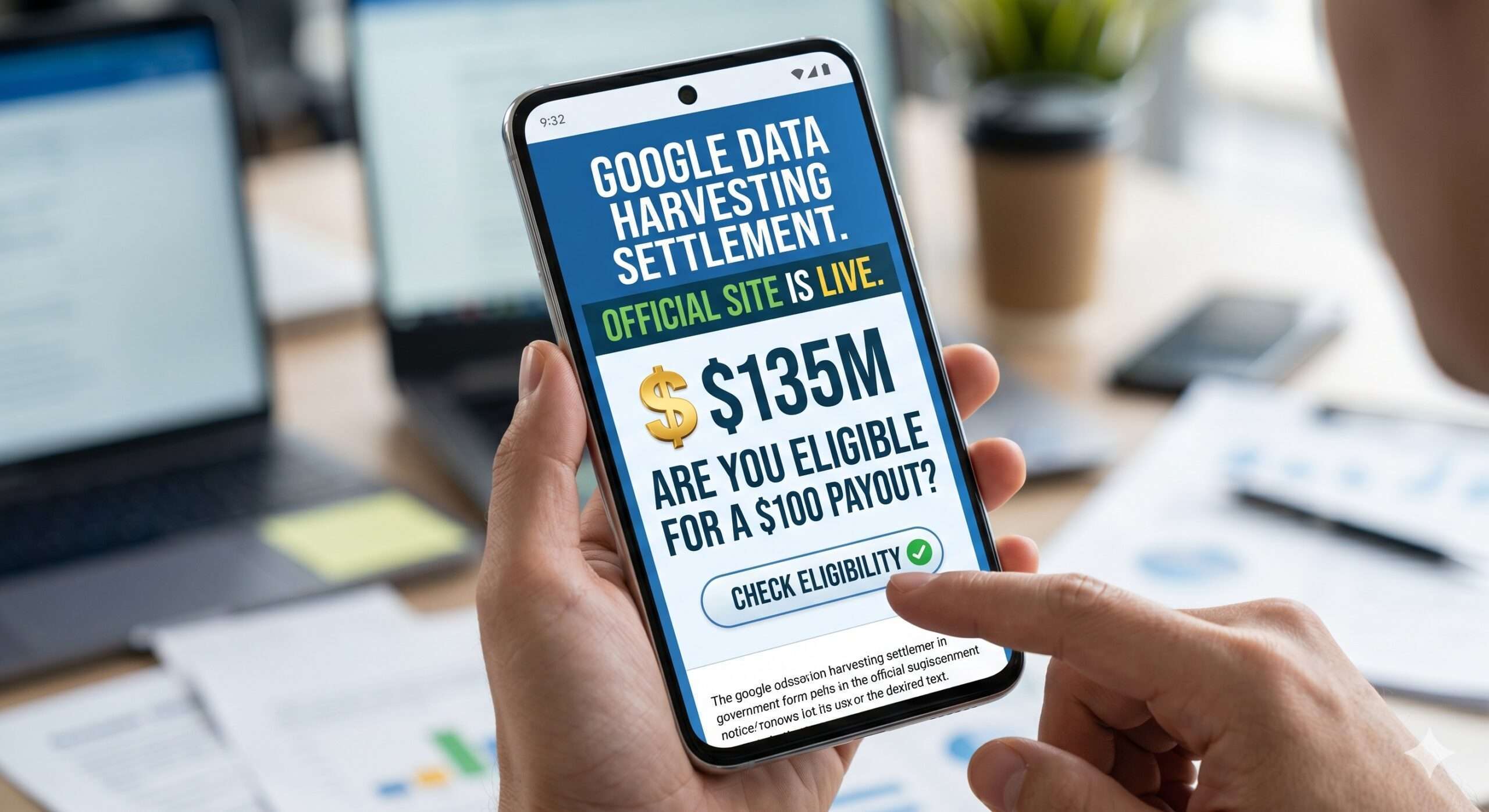

Have you ever suspected that your smartphone was quietly chewing through your cellular data while it was just sitting in your pocket? For millions of Android users across the country, that sneaking suspicion has resulted in a massive legal payout.
Google recently reached a preliminary agreement to pay $135 million to settle a class, action lawsuit regarding unauthorized data usage. The best part? The official settlement website is now live, which means you can officially step up to claim your share of the funds.
Here is everything you need to know about the lawsuit, whether you qualify, and exactly what you need to do before the deadlines hit.
The Backstory: Why is Google Paying Up?
The settlement stems from a class, action lawsuit known as Taylor v. Google LLC. The plaintiffs in the case accused the tech giant of secretly harvesting user data. According to the lawsuit, Google’s Android devices were passively transmitting cellular data back to Google’s servers without explicit user permission, even when the phones were sitting completely idle.
While Google has not admitted any wrongdoing, the company agreed in January to a $135 million settlement to resolve the claims. As part of the agreement, Google has also committed to updating its Google Play terms of service to be more transparent about background data transfers. Furthermore, the company has promised to completely halt data collection when a user toggles off the “allow background data usage” setting on their device.
Are You Eligible for a Payout?
With an estimated 100 million Android users potentially eligible, there is a very good chance you might be on the list. To be considered part of the settlement class, you must meet four specific criteria:
- You must be a living, individual human being residing in the United States.
- You must have used an Android mobile device that was connected to a cellular data plan.
- You must have used that device between November 12, 2017, and the final approval date of the settlement.
- You cannot be a class member in Csupo v. Google LLC, which is a very similar lawsuit but filed exclusively for California residents.
How Much Money Could You Get?
While it is always exciting to hear about a multi-million-dollar settlement, individual payouts will depend heavily on how many people actively claim their funds.
Currently, the maximum payout is capped at $100 per person. After all the administrative fees, taxes, and attorney costs are subtracted from the $135 million pool, the remaining funds will be distributed equally among the approved class members. If there is money leftover after the first round of payouts, the administrator will try to send out a second round of payments to those who successfully received the first.
What You Need to Do Next
If you meet the eligibility requirements, you don’t actually have to do anything to remain in the class, but you do need to take action if you want to get paid seamlessly.
- Select a Payment Method: Head over to the official settlement website to select how you want to receive your cash. If you do nothing, a payment may still be issued, but selecting a preferred digital payment method ensures the money actually makes it to your account.
- Mark Your Calendar: The court is scheduled to hold a final approval hearing on June 23, where they will determine if the settlement is entirely fair.
- Opt-Out or Object: If you wish to exclude yourself from the settlement entirely or write to the court to object to its terms, you must do so by May 29.
Keep an eye on the official settlement site for any changes to the hearing dates. For now, take a few minutes to register your payment method, you might just end up a little richer for it!
Read more: Your AI Chatbot Is Drinking Your Neighbour’s Water
When you ask an AI chatbot to write a poem or help with your homework, it feels like magic, an invisible force responding from a digital “cloud.” But for Sandra García, a 38-year-old factory worker in Colón, Mexico, that cloud has a very physical, very thirsty presence.
Sandra often turns her kitchen tap only to find it bone-dry. In her region, where 17 out of 18 municipalities are gripped by drought, she must trek to her landlord’s house to fill jerry cans just to have enough water for her family to survive. While she watches the sky for rain, a few miles away, massive data centers belonging to global tech giants are moving in, requiring millions of liters of water to keep their humming server racks from overheating…Read more