

- 29 November 2025
- No Comment
- 316
Why We Rent Everything Now
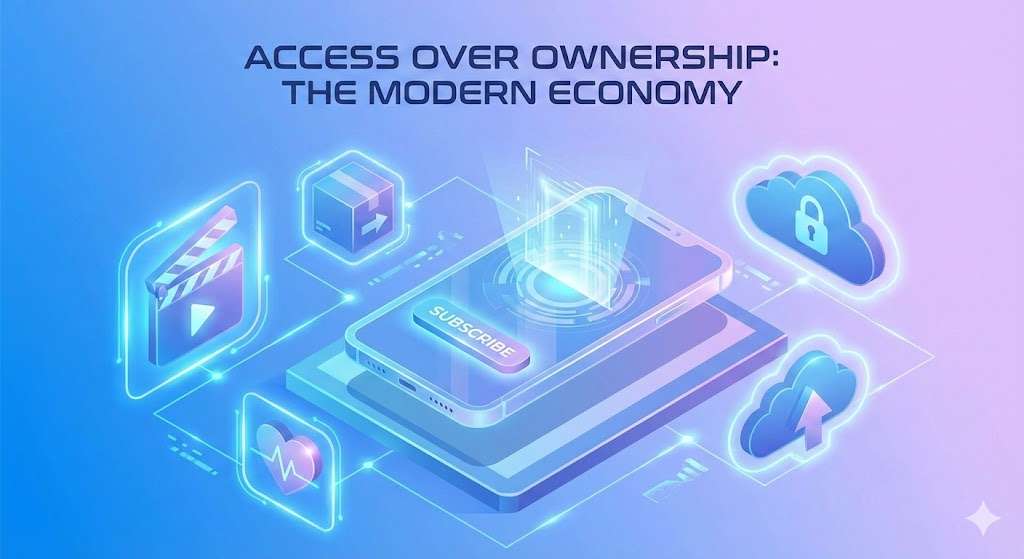

Have you noticed that you don’t really “own” your favorite movies anymore? You stream them on Netflix. No need to buy software on a disc; you pay a monthly fee to use it in the cloud. Even your car might ask for a monthly payment just to keep the heated seats warm.
Welcome to the Subscription Economy of 2025. It is a world where “access” is more important than “ownership,” and it has completely changed how businesses make money and how we live our lives.
Here is a look at why every startup is chasing monthly payments and how much money the biggest players are actually making.
The Golden Ticket: Why Startups Love “Recurring Revenue”
Imagine you run a lemonade stand. In the old days, you had to hope people would walk by and get thirsty every single day. You started every morning with zero dollars and had to hustle to make sales.
Now, imagine if 100 people promised to pay you $5 a month for unlimited lemonade. You would wake up on the first of the month knowing exactly how much money you were going to make. You could plan ahead, buy better lemons, and maybe even open a second stand.
That is the magic of Recurring Revenue, and it is why investors and startups are obsessed with it.
1. It’s Predictable
In the business world, certainty is expensive. Investors in 2025 are willing to pay much more for a company that has guaranteed subscribers than one that relies on one-time sales. It turns a risky business into a steady machine.
2. The “Gym Membership” Effect
We all know the feeling: you sign up for a service, use it for a few months, and then… stop. But you often forget to cancel. For companies, this is a financial safety net. Even if you aren’t using the product every day, they still get paid until you make the active decision to leave.
Who is Making the Big Money?
It’s not just Netflix anymore. Subscriptions have taken over everything from learning languages to tracking your health. Here is a look at the revenue generated by some of the most popular ventures.
The Health & Wellness Giants
-
Hims & Hers: This company started by selling hair loss and skin care products online. Now, they are a massive telehealth giant. By shipping prescriptions directly to people’s doors on a schedule, they are projected to bring in over $2.3 billion in 2025.
-
Whoop: You can’t just buy a Whoop fitness band; you have to subscribe to the app to see your data. This model has made the company incredibly valuable, worth over $3.6 billion, because it turns fitness tracking into a lifetime relationship.
-
Strava: If you run or cycle, you know Strava. While the app is free, millions pay for the “Premium” features to analyze their workouts. This community-focused model generated around $275 million in revenue recently.
The Learning Machine
-
Duolingo: The green owl is famous for pestering you to do your Spanish lessons. It works. By using a “freemium” model (free to use, pay to remove ads), Duolingo has built a massive business generating roughly $748 million a year.
The Creator Economy
-
Substack: This platform lets writers start their own paid newsletters. Instead of paying a newspaper, you pay your favorite journalist directly. It’s estimated that Substack generates over $45 million in revenue just from taking a small cut of what writers earn.
The Problem: “Subscription Fatigue”
It sounds great for businesses, but what about us?
By 2025, many of us are suffering from Subscription Fatigue.
We have a subscription for TV, music, cloud storage, dog food, vitamins, and even our doorbell cameras. A recent study found that nearly half of consumers have cancelled a service recently because costs are adding up.
The New Trend: “Churn and Return”
Because it’s so easy to click “unsubscribe,” a new habit has formed. People are signing up for a streaming service just to watch one specific show (like the latest season of Stranger Things or House of the Dragon) and then cancelling immediately after the finale. This is called “cycling,” and it’s forcing companies to fight harder to keep us entertained all year round.
What’s Next?
To keep us from cancelling, companies in 2025 are changing tactics:
-
The Bundle is Back: Just like the old cable TV packages, services are teaming up. You might see a bundle that includes Disney+, Hulu, and Max all for one price. It’s harder to cancel a bundle because you might lose three things instead of one.
-
Weekly Payments: Instead of asking for $50 a year, apps are asking for $3 a week. It feels cheaper (like buying a coffee), but it often adds up to more money in the long run. It feels “safer” to the consumer, which makes them more likely to sign up.
The Subscription Economy is here to stay. While it might feel like we are paying for everything forever, it has also given us access to libraries of music, movies, and tools that would have cost a fortune to own outright just a decade ago.
Step-by-Step Guide to Build a Profitable SaaS Business
It’s seen as the beautiful business of recurring revenue. Customers keep paying you every month, as long as you continue to deliver value. It’s a fantastic way to build a sustainable company.
But for every success story, countless others fail, often because they make the same critical mistakes. What if you could follow a proven path, one laid out by someone who has already built and sold multiple software companies?
This is that path. If you’re starting with nothing, no money, no followers, and no network, here is the simple, step-by-step blueprint to build a SaaS business from the ground up.