


- 7 February 2026
- No Comment
- 209
Was Karachi Built by Native Sindhi Muslims or Mahajir Muslims?

Author: Nabeel Shaikh
Reading Time: 3 min read
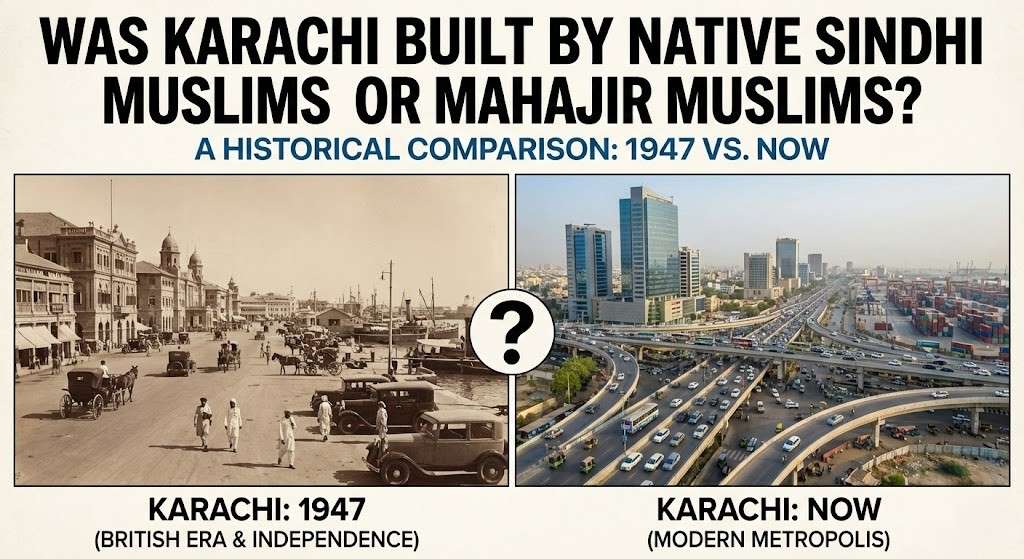
Karachi didn’t “happen” by accident, and it certainly wasn’t built by any modern political or nationalist group. Its foundations were laid long before 1947, shaped by geography, global trade, and British strategic planning during the Bombay Presidency era.
Yet today, we often hear oversimplified claims about “who built Karachi.”
History tells a very different story.
𝗞𝗮𝗿𝗮𝗰𝗵𝗶 𝗕𝗲𝗳𝗼𝗿𝗲 𝟭𝟵𝟰𝟳: 𝗔 𝗥𝗲𝗮𝗹𝗶𝘁𝘆 𝗖𝗵𝗲𝗰𝗸
From 1847 to 1936, all of Sindh, not just Karachi, was part of the Bombay Presidency. During this period, the British transformed Karachi from a modest port town into a major commercial and military hub because:
- It had the deepest natural harbor in the region
- It was the closest warm‑water port to Central Asia
- It offered strategic military value for the British Empire
This is when Karachi saw the development of:
- Ports and docks
- Railway connectivity
- Municipal governance structures
- Cantonments (Clifton, Manora, Malir, Korangi – still present today)
- Commercial districts that connected India to global markets
These weren’t built by any provincial political force or ethnic group.
They were built because Karachi was too important not to be developed.
𝟭𝟵𝟯𝟲: 𝗦𝗶𝗻𝗱𝗵 𝗕𝗲𝗰𝗼𝗺𝗲𝘀 𝗮 𝗣𝗿𝗼𝘃𝗶𝗻𝗰𝗲 𝗔𝗴𝗮𝗶𝗻
When Sindh was separated from the Bombay Presidency in 1936, Karachi became the provincial capital on the demand of Mr. Jinnah, but the city’s infrastructure, institutions, and commercial backbone were already in place.
This separation was supported by many Sindhi Muslim leaders, including GM Syed, who argued that:
- Bombay’s Hindu commercial elite dominated education and economic opportunities
- Sindhi Muslims were structurally disadvantaged
- A separate province was essential for Sindh’s cultural and political development
Quaid‑e‑Azam had already endorsed the demand for Sindh’s separation in his 14 Points (1929).
GM Syed later mobilized Sindhi leadership around this cause and helped make it a political priority.
This alignment was strategic:
- GM Syed wanted Sindh to escape Bombay’s economic dominance
- Jinnah wanted Muslim‑majority provinces to have political autonomy
This collaboration eventually led Sindh to become the first province to pass a resolution supporting Pakistan (1943).
𝟭𝟵𝟰𝟳: 𝗞𝗮𝗿𝗮𝗰𝗵𝗶 𝗕𝗲𝗰𝗼𝗺𝗲𝘀 𝗣𝗮𝗸𝗶𝘀𝘁𝗮𝗻’𝘀 𝗙𝗲𝗱𝗲𝗿𝗮𝗹 𝗖𝗮𝗽𝗶𝘁𝗮𝗹
When Pakistan was created, Karachi was placed under federal control because:
- It was the only city with the infrastructure to host a national government
- It had international connectivity
- It had administrative capacity
- It was already a cosmopolitan commercial center
Again, this wasn’t the result of any local political movement.
It was the result of Karachi’s strategic and economic value, recognized globally.
𝗪𝗵𝗼 𝗔𝗰𝘁𝘂𝗮𝗹𝗹𝘆 𝗥𝗮𝗻 𝗞𝗮𝗿𝗮𝗰𝗵𝗶 𝗕𝗲𝗳𝗼𝗿𝗲 𝗣𝗮𝗿𝘁𝗶𝘁𝗶𝗼𝗻?
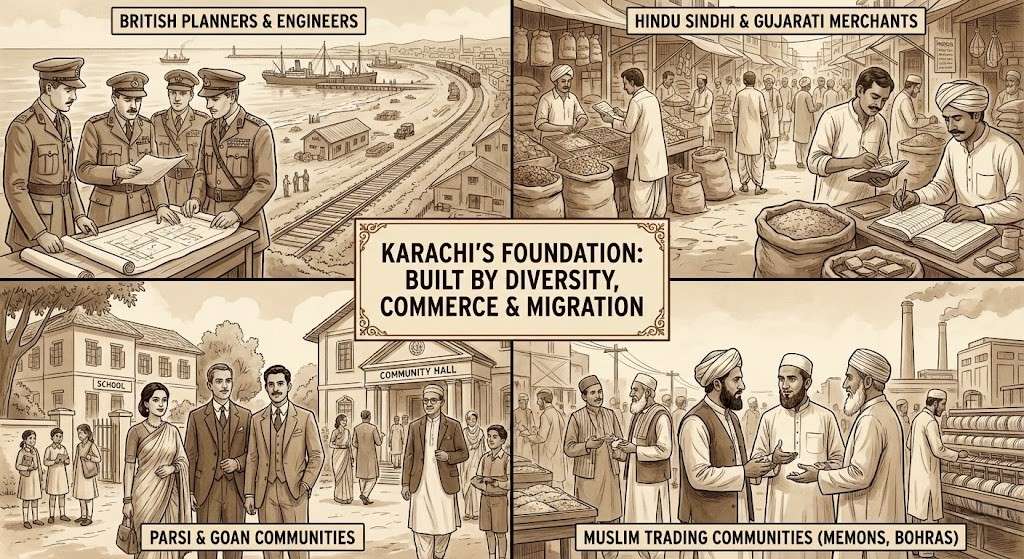
By 1947, Karachi’s urban economy and bureaucracy were dominated by:
- Hindu Sindhis (30 – 33% of total population of 450K as per 1941 census)
- Gujarati Hindus, including Banyas and Lohanas (20 – 22%)
- Parsis (6 – 7%)
- Goans Christians (3 – 4%)
- Muslim trading communities (Khojas, Bohras, Memons) (12 – 15%)
- Sindhi Muslims (7 – 8%)
- Punjabi Muslims (5 – 6%)
- Pashtuns (3 – 4%)
- Others (Baloch, Jews, Iranians etc) (2 – 3%)
Most of these groups migrated to India after partition.
Native Sindhi Muslims were a minority in Karachi’s urban areas and were largely connected to rural and agricultural life.
𝗔𝗳𝘁𝗲𝗿 𝟭𝟵𝟰𝟳, 𝘁𝗵𝗲 𝗮𝗱𝗺𝗶𝗻𝗶𝘀𝘁𝗿𝗮𝘁𝗶𝘃𝗲 𝗮𝗻𝗱 𝗰𝗼𝗺𝗺𝗲𝗿𝗰𝗶𝗮𝗹 𝘃𝗮𝗰𝘂𝘂𝗺 𝘄𝗮𝘀 𝗳𝗶𝗹𝗹𝗲𝗱 𝗯𝘆:
- Migrant Muslims from India
- Punjabi and other Muslim communities
- Skilled professionals who expanded Karachi’s population and economy
They didn’t “build” Karachi from scratch, they continued and expanded a city already developed by the British and
shaped by diverse pre‑partition communities.
𝗦𝗼 𝘄𝗵𝗼 𝗯𝘂𝗶𝗹𝘁 𝗞𝗮𝗿𝗮𝗰𝗵𝗶?
Not modern politicians.
Not selective ethnic narratives.
Not post‑1947 political slogans.
Karachi was built by:
- Geography
- Global trade routes
- British strategic planning
- Migrant communities working alongside natives
- Entrepreneurs, traders, workers, and settlers from across South Asia
Karachi has always been a city shaped by movement, migration, and markets, not by ethnic ownership.
Why this matters today
When political narratives claim exclusive credit for Karachi’s development, they erase the city’s true identity:
A global port city built on diversity, commerce, and strategic importance, not on provincial politics.
Understanding this history isn’t about diminishing anyone.
It’s about grounding our conversations in facts, not myths.
Karachi belongs to everyone who contributes to it.
And its story is far bigger than any political slogan.
The real question today isn’t who built Karachi, it’s who will rebuild it.
And the only sustainable answer is merit, competence, and good governance.