

- 25 February 2026
- No Comment
- 127
E-Commerce Benefits for Small Businesses
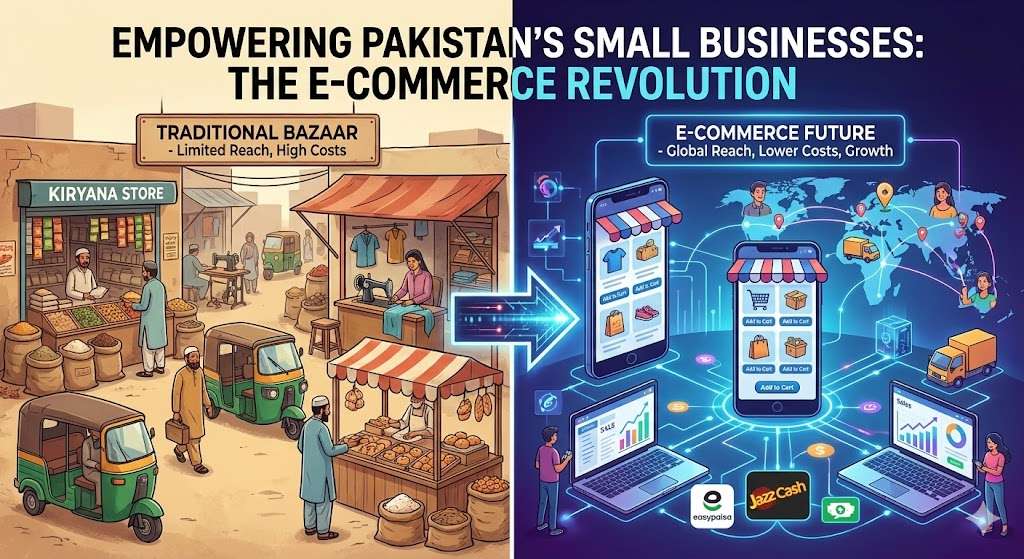

Small business are the backbone of our economy. Whether it’s a kiryana store, tailoring shop, small bakeries, small clothing brand, etc. They all are really important for any country’s economy. These small vendors are providing millions of families across country. Despite their importance, small businesses owners often face serious challenges such as rising rents, inflation, limited customers, and unstable market conditions.
In recent years, e-commerce has provided a practical and realistic solution for many of these problems. With worldwide smartphone usage, affordable internet packages, and digital payment options like Easy paisa and Jazz Cash, selling online is no longer difficult or expensive. E-commerce allows small businesses in Pakistan to reach customers beyond their local area, reduce daily expenses, and run their operations more smoothly.
This article explains the key benefits of e-commerce for small businesses in Pakistan and shows how adopting online selling can help local entrepreneurs grow and survive in a competitive environment.
WHAT IS E-COMMERCE:
E-commerce is also known as electronic commerce refers to buying and selling of goods and services through online platforms. Common examples of e-commerce are online shopping, online auctions, internet banking, etc. businesses can build there own e-commerce website and operate globally.
TYPES OF E-COMMERCE:
- Business-to-Consumer (B2C): Selling products directly to consumers.
- Business-to-Business (B2B): Transaction between companies.
- Consumer-to-Consumer(C2C): Consumers selling to other consumers.
- Consumers-to-Business (C2B): Individuals offering services to businesses.
Why E-Commerce is Important for Small Businesses?
Most small businesses in Pakistan operate with limited capital and depend heavily on walk-in customers. Problems such as load shedding, security concern, transportation cost, and warehousing cost can directly affect daily sales. E-commerce reduces this dependence on physical locations and walk-in customers as this helps businesses to reach worldwide.
By going online, small businesses can display their products digitally that help reduce original stock cost, communicate with customers easily, and receive payments without cash handling. This is especially helpful for women entrepreneurs and home-based businesses who may face issues in handling their business in markets.
E-commerce also provides stability. Even during difficult situations such as lockdowns, fuel price increases, or bad weather, online businesses can continue to receive orders and generate income.
E-commerce will help small vendors to earn recognition globally and sell their products and services to customers globally.
Many emerging talents like small artist and hand-made jewelry maker can sell their talent and earn recognition through online platforms like social media.
Benefits of E-commerce for Small Businesses
1. Significantly Lower Cost:
Opening a physical shop in market is costly requires rent, electricity bills, shop maintenance, and staff salaries. These costs can be overwhelming for small business owners. E-commerce significantly reduces these expenses.
How costs are reduced
- No need to rent a shop in a busy market.
- Lower utility and maintenance costs.
- Smaller staff required
As a result, owner can invest more in product quality and packaging.
2. Global Market Reach:
Usually small businesses like crockery shops, small clothing stores, etc operates in a small market area available to a limited reach of customers. E-commerce resolve this issue in a really good way through this these small businesses can target on a large number of consumers throughout the world. Through E-commerce they can:
- Sell products from small towns to big cities like Karachi, Lahore, and Islamabad
- Attract overseas Pakistanis looking for local products
For example, a handicraft seller in Multan or a home-based baker in Rawalpindi can now receive orders from multiple cities through social media and online platforms.
3. 24/7 Availability:
Physical shops is available to consumers for a limited time as markets operates for a specified time in any area but through E-commerce consumer can place order whenever they are free through online websites. This make buyer available to every consumer 24/7.
4. Increase Sales and Scalability:
By selling in a limited area sales are also limited but if seller starts to operate online too by creating a website. It helps seller to:
- Be available to more areas consumers
- That results in an increase in sales
E-commerce makes it easier for small businesses to grow step by step. New products can be added without major changes or heavy investment as storing actual goods is not required.
Flexible Growth Options
- Simple product updates
- Automated order processing
- Easy expansion into new cities
- Less warehousing/storing cost
This supports long term business growth.
5. More Marketing Opportunities:
E-commerce provide affordable and effective marketing options to small businesses.
Digital marketing tools
- Facebook and Instagram ads for local targeting
- WhatsApp Business for direct communication
- Search engine visibility for online stores
These methods cost much less than traditional advertising and allow businesses to reach the right audience.
6. Data-Driven Decision Making
Many small business owners rely on experience when making decisions and experience take time. E-commerce platforms provide useful data that helps improve planning.
How Data Helps them
- Identify best-selling products
- Understand customer choices and demands
- Track seasonal demand during Eid, weddings, and festivals
This information helps reduce losses and improve profitability.
7. Building Trust and Brand Identity:
An online presence helps small business to earn customers trust. A professional page, clear product photos, and honest reviews create confidence.
It will provide:
- Customer’s review and feedback
- Clear return and delivery policies
- Consistent branding and communication.
Trust plays a major role in repeat purchases and customer loyalty.
8. Convenient for Customers:
Today’s generation wants convenience. Online shopping help them to browse as many shop as they want, compare pricing and place orders from the comfort of their home.
Customer-friendly features
- Easy product browsing
- Multiple payment options including cash on delivery
- Home delivery services
- Multiple choices
When customers have a smooth shopping experience, they are more likely to buy again and recommend the business to others.
Common Challenges of E-Commerce and How to Overcome Them
While E-Commerce offers many benefits, it also have some challenges that small businesses would face. Some of them are following with solutions:
- Limited digital skills: as mostly small vendors and businessmen are not that educated to have literacy in online selling skills so they face difficulty in operating online business and obviously due to limited capital they can’t hire professionals. In this case they should start with simple platforms and learn gradually through online courses available on YouTube for free.
- Trust issues from customers: mostly customers have trust issues on online shopping due to online scams. To overcome this sellers should offer cash-on-delivery and return policy to sustain consumers trust.
- Delivery problems: this is one of the main challenge for small businesses as when they receive order from far areas or from different city they couldn’t deliver it on time or had to refuse because of higher delivery costs. To overcome this challenge small entrepreneurs should sign a contract with local courier companies to deliver all their orders on fixed monthly charges.
A Local Case Example: From Home Kitchen to Nationwide Orders
- Ayesha, a home-based baker from Karachi, started her small business by selling cakes and cookies to neighbours and relatives. At first, her customers are limited her known people making her sales limited. Most order come from her PR and through word of mouth and sales are irregular. With this pace growth is impossible and to grow business she need to open a shop which is not affordable for her.
- One day everything changed when her friend Kinza come from abroad after studying. Kinza gave her idea to make an Instagram page of her bakery and invest in marketing of that page to reach more customers. She follow her friend’s advice. Firstly, she face difficulties in operating online but she learn gradually with the help of YouTube courses and soon her page started to gain followers nationwide. She showcased her baked items on her Instagram page, upload clear photos and started to take orders on Whatsapp. To make payments easier for customers she offer cash-on-delivery and online payment methods like jazz cash and easy paisa. She also partnered wit a local courier service for deliveries.
- After few month Ayesha started to receive orders from Karachi, Islamabad and even Lahore. During festive season such as Eid, her online orders doubled. By using social media promotions and customers review she builds trust without spending large amount on advertising.
- Today, Ayesha operates her business entirely online, manages orders from home, and earns more than she did before. She also now has an official website of her bakery. E-commerce allows her to reduce cost, reach a wider global market and grow her business.
- This example shows how E-commerce help empower small business, especially home-based and women-led enterprises.
Future of E-Commerce:
- Today’s generation is shifting to digital world, E-commerce is growing rapidly. Mobile usage, digital payments, and online shopping habits continue to increase every year. People are so used to this comfort, that they don’t want to go out in traffic and shop physically.
- Businesses that adapt E-commerce early will have a strong advantage. Online selling is no longer optional; it is becoming an essential part of doing businesses.
Conclusion:
In this Article, we discuss about how E-commerce help small businesses to grow their business in lower cost, with global market reach, and with more driver decision-making. It also help them to increase their sales and scalability without spending much on investments. E-commerce help local entrepreneurs overcome traditional business limitations. We also discuss how to overcome challenges in adopting E-commerce.
For small business owners, adopting e-commerce is not just about increasing sales. It is about building stability, reaching new opportunities, and securing a sustainable future in this digital world.
Author: Areesha Imran
Program: CAF Student (ICAP)
This article is submitted by author as part of the Nashfact National Writing Competition. Views expressed are the author’s own.