

- 15 December 2025
- No Comment
- 306
When Data Talks Louder Than the CEO
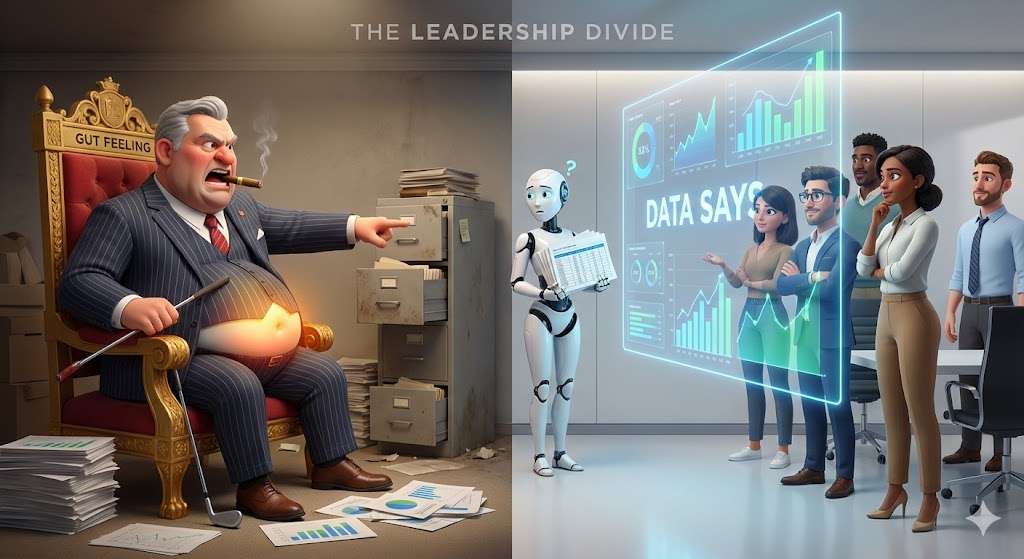

The Death of Gut Feeling: When Old-School Bosses Meet the Data Wall
For decades, corporate leadership ran on one sacred belief: the boss knows best.
Not because the data said so, not because customers proved it, but because he had been around long enough to “feel it in his bones.”
The legendary CEO archetype was simple. He walked into meetings with confidence, dismissed spreadsheets with a smirk, and made million-dollar decisions based on instinct, experience, and a vague story about how things worked back in 1998. If you questioned him, you were “not seeing the big picture.” If the decision failed, the market was to blame.
This was the age of the Golden Gut.
Fast forward to 2025, and that leadership model is quietly collapsing under the weight of dashboards, algorithms, and uncomfortable evidence. The gut is no longer king. The spreadsheet has teeth now.
Welcome to the era where leadership intuition is being audited.
When “Trust Me” Stops Working
In old-school corporate culture, authority flowed downward. Decisions weren’t debated, they were announced. The loudest voice in the room usually belonged to the most senior person, and data was often invited late, only to confirm what had already been decided.
This wasn’t leadership, it was hierarchy cosplay.
Today’s business environment is too fast, too complex, and too exposed for that model to survive. Markets move in real time. Customers react publicly. Supply chains break overnight. And suddenly, the executive who “just knows” starts looking dangerously under-informed.
This is where the HiPPO thrived, the Highest Paid Person’s Opinion. The HiPPO didn’t need proof, only confidence. Teams learned quickly that challenging intuition was career-limiting behavior. Data became decoration, not direction.
In 2025 and beyond, that mindset is a liability.
Complexity Has Killed the Gut
Back in the 90s, a senior operations head could predict slowdowns with experience alone. December meant delays. Summer meant demand spikes. It was manageable.
Now? A single business decision might depend on tariffs, energy prices, viral TikTok sentiment, regional labor shortages, weather anomalies, and geopolitical risk, all at once.
No human brain can juggle that chaos reliably. But machines can.
AI decision systems don’t care about seniority. They don’t protect egos. They don’t cling to “how we’ve always done it.” They simply process patterns at a scale humans can’t touch.
That’s why data-driven organizations keep outperforming. Not because they’re smarter people, but because they’ve stopped pretending intuition is enough.
The uncomfortable truth for old-school leaders is this, experience without evidence is just memory.
From Rearview Mirrors to GPS Leadership
Traditional reporting answered one question, what happened?
Modern systems answer a far scarier one, what should we do next?
Old dashboards were corporate post-mortems. Sales dropped. Costs rose. Everyone panicked. Meetings followed. Blame was assigned.
Now dashboards behave more like co-pilots. They don’t just explain outcomes, they recommend actions. Adjust pricing. Switch suppliers. Change staffing levels. Test this version instead.
This shift makes many veteran leaders uneasy, because it moves them from decision-makers to decision-approvers. The authority feels different. Less dramatic. Less heroic.
And far more effective.
In retail, leaders once discounted products based on gut instinct. Rain meant umbrella sales, so slash prices. AI models later proved the opposite. Demand spiked because people were desperate, not price-sensitive. The smarter move was upselling coffee and accessories, not giving away margin.
The gut felt right. The data made money.
Why Data Fluency Is the New Power Skill
There’s a misconception floating around boardrooms that smarter tools mean leaders can relax. Nothing could be further from the truth.
As machines get better, leadership gets harder.
Reading charts isn’t enough anymore. That’s basic literacy. What modern leadership demands is fluency, the ability to question the data, understand its blind spots, and recognize when optimization creates long-term damage.
A data-fluent leader doesn’t blindly obey the algorithm. They challenge it. Ask what’s missing, and they understand trade-offs. They recognize that not everything valuable fits neatly into a metric.
The real danger ahead isn’t AI replacing executives. It’s executives outsourcing their thinking.
Some leaders will accept recommendations without reflection. Cut staff. Reduce support. Optimize costs. Then act surprised when loyalty collapses and brand trust evaporates.
The strongest leaders will do the opposite. They’ll use machines for efficiency and humans for judgment. That balance is the new edge.
Culture Is Where the Real War Is
Installing dashboards is easy. Changing mindset is brutal.
Data culture threatens old power structures. It exposes bad instincts. It removes the protective fog of seniority. Suddenly, a junior analyst with a strong model can challenge a VP, and be right.
Meetings change too. Charisma loses influence. Evidence gains weight. Opinions without data sound hollow. For leaders who built careers on presence and authority, this feels like erosion.
Some adapt. Others resist.
Companies like Salesforce are already moving toward management-by-metrics, where leaders intervene only when numbers demand it. Middle management shifts from supervising people to supervising signals.
For some, this feels cold. Mechanical. Dehumanizing.
Which is why emotional intelligence matters more than ever.
As logic becomes automated, humanity becomes leadership’s last unfair advantage. Empathy. Judgment. Context. Moral restraint. These are not bugs in decision-making. They’re safeguards.
The leader of the future isn’t a machine. They’re a translator between machine logic and human consequence.
How Companies Actually Make the Shift
The organizations pulling ahead aren’t waiting for perfect systems. They’re changing behavior.
They open access to data instead of hoarding it. They reward learning over being right. Leaders publicly admit when data proves them wrong. Ego loses status. Curiosity gains it.
They also invest in people who can translate insights into narratives executives can act on, not data scientists in ivory towers, but interpreters who bridge technology and strategy.
This isn’t about replacing leadership. It’s about removing its blindfold.
Where Gut Feeling Still Belongs
Intuition isn’t dead. It’s just been promoted.
AI will handle operations. Pricing. Forecasting. Staffing. Optimization.
Humans will handle meaning. Ethics. Direction. Identity.
The biggest decisions ahead won’t be numerical. They’ll be existential. Who do we want to be? What lines won’t we cross? What kind of company deserves to exist?
The leaders who thrive won’t be the loudest voices or the sharpest instincts. They’ll be the ones brave enough to let data challenge them, and wise enough to know when not to obey it.
The age of gut feeling dominance is over.
Leadership didn’t lose power. It just lost its excuses.
The New Leadership Archetype

The revolution is here. The dashboard is open.
The only question left is: Are you brave enough to do what the data says?