


- 26 January 2026
- No Comment
- 18
Do You Know the Real Cost of Your Outfit?

Why Your Closet Matters
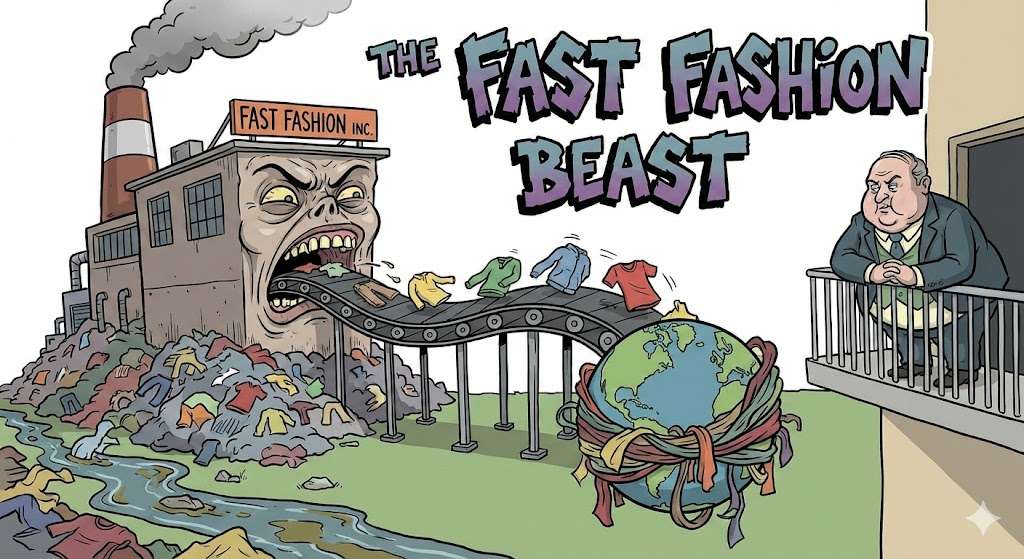
The global fashion industry is at a tipping point. Historically, making clothes was a slow process that valued quality and natural materials. Today, however, the industry has shifted to a “take, make, dispose” model, a linear system that extracts resources, manufactures cheap garments rapidly, and dumps massive amounts of waste into the environment.
The scale of this problem is staggering. We now produce over 100 billion garments every year, double the amount from the year 2000. This explosion isn’t just because there are more people on Earth; it is driven by “fast fashion.” This business model pushes new trends into stores in a matter of weeks, treating clothing like disposable food rather than durable goods. As a result, we wear our clothes 36% less often than we did just 15 years ago.
The environmental cost is hidden but massive. The fashion sector causes 20% of industrial water pollution globally, turning rivers in Bangladesh and China black with toxic dyes, and is a major driver of the plastic pollution crisis. This article explores the mechanics of this environmental disaster, the “waste colonialism” of exporting trash to developing nations, and whether technology or new laws can fix the broken system.
The Fast Fashion Trap: Why We Buy So Much
To fix the problem, we must understand the economic engine behind it. Fast fashion isn’t accidental; it is designed to prioritize speed and volume over quality.
The Need for Speed
Fast fashion brands rely on cheap labor and weak environmental laws to keep prices rapidly low.
- Massive Volume: The industry churns out enough clothes to provide every person on the planet with 12 to 14 new items annually.
- Throwaway Culture: We used to keep clothes for years. Today, items are often thrown away after just seven to ten wears. This is fueled by cheap synthetic materials and the pressure to follow “micro-trends” pushed by apps like TikTok.
- Ultra-Fast Fashion: Giants like Shein and Temu have accelerated this even further, using data to push thousands of new designs daily.
The Secret of Unsold Clothes
A shocking reality of the fashion industry is that much of what is made is never even bought.
- Wasted Inventory: Estimates suggest 20% to 30% of manufactured garments are never sold.
- Burning Money: Instead of discounting items and damaging their brand image, many luxury and mass-market brands destroy them. They burn unsold stock for energy, releasing carbon and toxic chemicals. In this twisted economic model, it is often cheaper to burn clothes than to recycle them.
The High Cost of Being Poor
The industry mirrors the “Boots Theory” of inequality: poverty forces people to buy cheap, low-quality goods that need frequent replacing, costing more in the long run than expensive, durable items.
- Worker Poverty: To keep clothes cheap, workers in places like Myanmar and Bangladesh earn as little as $2.63 a day.
- Consumer Trap: Shoppers are trained to view clothes as disposable, leading to a cycle of constant spending that yields only waste.
Thirsty Fashion: The Water Crisis
Water is the lifeblood of the textile industry, and we are using far too much of it.
The Water Footprint of Your Wardrobe
Fashion is the second-largest consumer of water globally, right behind agriculture.
- Cotton: Producing just one kilogram of cotton can take up to 22,500 liters of water.
- The T, Shirt Cost: A single cotton t, shirt requires about 2,700 liters of water to make, that is as much as an average person drinks in 2.5 years.
- Denim: A pair of jeans takes nearly 3,800 liters, mostly for cotton farming and the washing processes used to make them look “distressed.”
Toxic Rivers: The Hidden Cost of Color
The most visible damage comes from dyeing and finishing fabrics. The industry uses over 8,000 chemicals, creating a toxic cocktail that is often dumped directly into nature.
Global Pollution Hotspots:
- Bangladesh (Buriganga River): This river is biologically dead in many sections. It is black, foul-smelling, and filled with heavy metals and chemicals, posing severe health risks to locals.
- India (Noyyal River): The knitwear industry has made the water here so salty and chemically heavy that it has destroyed local agriculture.
- China (Pearl River Delta): Once the “workshop of the world,” this area suffers from long-term contamination by heavy metals used in polyester production.
Wearing Oil: The Plastic Problem
A major, often overlooked issue is the shift from natural fibers (like cotton) to synthetics (like polyester). Today, polyester makes up over half of all fiber production.
Fossil Fashion
Synthetic fabrics are essentially plastics made from fossil fuels. Producing polyester emits nearly three times more carbon dioxide than growing cotton. By relying on these materials, the fashion industry is keeping the oil industry in business.
The Microplastic Threat
The damage continues even after you buy the clothes. Every time you wash a synthetic garment (like a fleece jacket or polyester leggings), it sheds thousands of tiny plastic fibers.
- The Numbers: A single laundry load can release up to 700,000 microfibers.
- The Journey: These fibers are too small for water treatment plants to catch. They flow into rivers and oceans, where they are eaten by fish and plankton. Eventually, they move up the food chain and end up on our dinner plates in seafood.
- The Persistence: Unlike cotton, which biodegrades, polyester fibers stick around for centuries.
Where Do Old Clothes Go? The Myth of Donation
When we donate clothes, we like to think they are being reused. In reality, the “disposal” of clothes often just means moving the trash from rich countries to poor ones, a practice known as “waste colonialism.”
The Reality of Recycling
Most donated clothes are not sold locally. They are packed into bales and shipped to the Global South. Because fast fashion quality is so low, many of these clothes are trash the moment they arrive.
Ghana: The Crisis at Kantamanto
Ghana receives 15 million used items every week. Locals call them Obroni Wawu, “dead white man’s clothes.”
- The Waste: About 40% of every imported bale is unsellable junk.
- The Impact: This creates nearly 100 tonnes of daily waste that clogs rivers, causes flooding, and pollutes beaches with tangled “tentacles” of old fabric.
Chile: The Desert Landfill
In Chile’s Atacama Desert, one of the driest places on Earth, mountains of unsold clothes are illegally dumped.
- Visible from Space: At least 39,000 tonnes of clothes are dumped here annually.
- Toxic Fires: To manage the pile, these clothes are often burned, releasing toxic smoke that harms nearby poor communities.
Can Technology Save Us?
The industry is looking for tech solutions, but there is more hype than hope right now.
The Recycling Reality
Currently, less than 1% of clothing material is recycled into new clothing. Most “recycled polyester” actually comes from plastic bottles, not old clothes.
- Mechanical Recycling: Shreds fabric into fiber. It’s cheap but lowers quality and can’t separate mixed fabrics (like poly-cotton blends).
- Chemical Recycling: Breaks waste down to the molecular level to create new, high-quality fibre.
|
Feature |
Mechanical Recycling |
Chemical Recycling |
| Process |
Shredding fabric |
Dissolving with chemicals |
| Quality |
Lower (shorter fibres) |
High (virgin quality) |
| Cost |
Low |
High |
|
Scalability |
Established |
Emerging & Expensive |
The Renewcell Warning
In 2024, a leading recycling company called Renewcell went bankrupt despite having great technology. Why? Because brands weren’t willing to pay extra for recycled materials when new, virgin resources were so cheap. This proves that technology alone cannot fix an economic problem.
Changing the Rules: Laws and Solutions
Since companies haven’t fixed the problem voluntarily, governments are stepping in.
The EU Leads the Way
The European Union is creating a “Strategy for Sustainable and Circular Textiles” to force change by 2030.
- Ban on Destruction: It will be illegal to destroy unsold goods.
- Digital Product Passports: Clothes will carry a digital record of their materials and recyclability.
- Polluter Pays: Brands will be financially responsible for their products’ end-of-life. If they make disposable junk, they will pay higher fees.
Cracking Down on Greenwashing
Regulators are also targeting fake eco-claims (“greenwashing”). For example, Italian authorities recently fined Shein for making misleading claims about their “sustainable” collections.
The Future of Fashion
The evidence is clear: the current way we make and buy clothes is an environmental disaster. We extract resources, pollute water, and dump waste on vulnerable nations.
While technology like waterless dyeing and chemical recycling is promising, it cannot scale as long as it is cheaper to pollute than to be sustainable. We need a systemic reset. This includes:
- Global Laws: Expanding the EU’s strict regulations to the rest of the world.
- Taxing Pollution: Making virgin plastic and water usage expensive so that sustainable options become competitive.
- Buying Less: Ultimately, we must move away from fast fashion. We need to buy fewer, better things and support business models based on repair and resale.
The textile industry has woven a web of destruction. Unraveling it requires policymakers, brands, and consumers to stop believing the fast fashion myth and start building a truly circular future.